REVIEW · FUERTEVENTURA
FUERTEVENTURA: Full Moon Hike – Sunset to Moonrise
Book on Viator →Operated by Stars by Night · Bookable on Viator
Sunset and moonrise share the same trail. This volcano-side hike in Fuerteventura strings together golden light, a quick twist into twilight, then a moonrise that makes the volcanic ground glow.
I love the astronomy focus with real tools: binoculars for the sky, plus a head torch for the walk back. I also love the human touch of the guide, with names like Karen (and at least one night with Subina) showing up in the experience.
One catch: there are no bathroom facilities, so you’ll want to plan ahead. And the ground can be uneven over lava, so comfy shoes matter.
In This Review
- Key things to know before you go
- Sunset to moonrise under a volcano in Fuerteventura
- Timing that actually makes a difference
- Small group, big sky time, and the Star Guide factor
- The hike itself: sunset, blue hour, then moonrise stargazing
- 1) Getting into position for sunset
- 2) The blue hour descent and first star spotting
- 3) Full moon rise, laser pointer guidance, and planet chances
- 4) The Barbary Falcon call
- Gear you get (and what to bring anyway)
- Where the price feels fair (and what you’re really paying for)
- Weather and communication you should plan for
- Who this hike suits best
- Should you book this full moon hike?
- FAQ
- What’s the duration of the Fuerteventura full moon hike?
- What time does the tour start?
- Where is the meeting point?
- Is pickup offered?
- What’s included in the tour?
- Are there bathroom facilities during the hike?
- What fitness level do I need?
- How many people are in the group?
- What language is the tour offered in?
- What happens if the weather is bad?
- Are service animals allowed?
Key things to know before you go
- Sunset to moonrise timing: you start about 1.5 hours before sunset, then the group keeps moving into full dark.
- Small group: max 13 people, which makes it easier to see the sky and ask questions.
- Star Guide-led stargazing: binoculars and a laser pointer help you pick out stars and planets during the darkest moments.
- Weather changes everything: the provider can reschedule if conditions are off.
- Bring real footwear: lava terrain can be tricky even if the hike is not steep.
Sunset to moonrise under a volcano in Fuerteventura
This is one of those rare tours where the best part is not a building or a viewpoint. The magic is the sky, and you get there the old-fashioned way: walking through the volcanic night.
What makes it work is the pacing. You’re not just watching sunset from one spot, then racing to find shade and dinner. You’re moving through the light shift itself, from blazing sunset colors to the short, gorgeous blue hour, then into full moon glow. If you enjoy that in-between time (the moment when the world cools down), you’ll love how this hike is built.
Other stargazing experiences in Fuerteventura
Timing that actually makes a difference
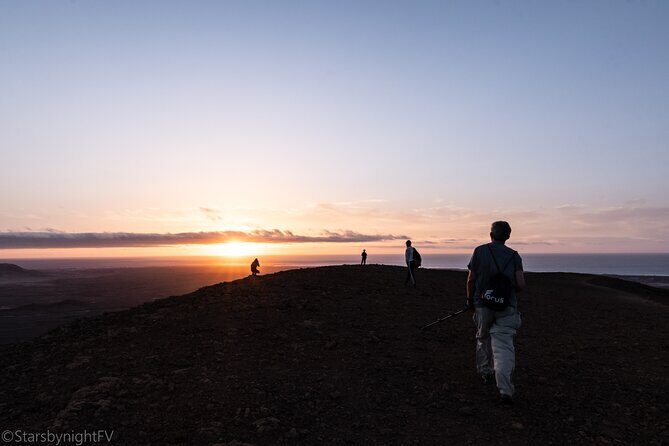
The tour runs about 3 hours, but the start time floats. The schedule is built around two moving targets: sunset and the full moon rising. The meeting point is listed with a 5:00 pm start time, yet the guide estimates an actual meet time based on the day.
Here’s the practical part: you start walking roughly 1.5 hours before sunset. That gives you time to get down the trail, settle into position, then watch the sky change without feeling rushed.
If you’re planning dinner afterward, don’t count on a quick finish. You’ll want to eat first, not during the tour. (And yes, you’ll learn this recommendation the moment you realize there are no bathrooms.)
Small group, big sky time, and the Star Guide factor
This is a maximum 13-person experience. That’s a sweet spot for a night hike. With a larger group, stargazing often turns into shoulder-to-shoulder noise. Here, it feels more like you can actually look up, ask a question, and hear the explanation.
The guide is a qualified Star Guide, and the tone is practical and friendly, not lecture-mode. People have specifically mentioned Karen for star and planet spotting, and at least one evening included Subina. Either way, the guide’s job is to help you see what your eyes usually miss in bright daytime life.
Expect stories tied to place, too. The guide covers geology, local history, and culture in the flow of the hike, not as a separate museum-style talk. That matters because you’re learning while you’re literally standing on volcanic ground.
The hike itself: sunset, blue hour, then moonrise stargazing
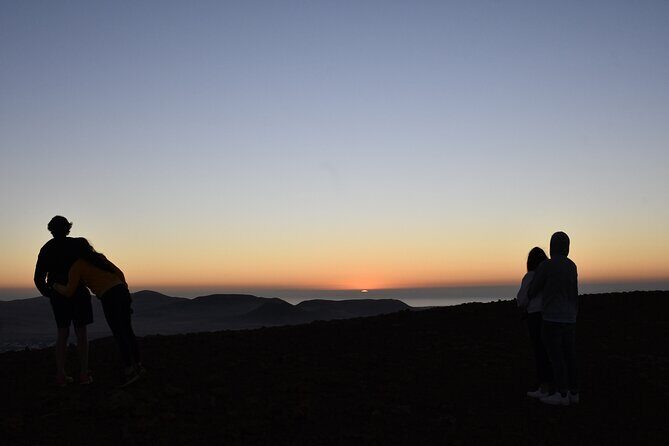
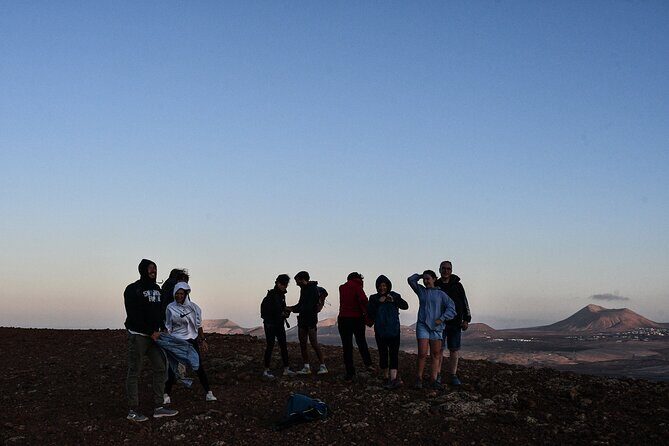
The trail is described as not strenuous, but you still need to take it seriously. Lava terrain can be uneven, and you may find yourself looking down to avoid tripping. That doesn’t mean it’s hard climbing. It means you should walk like a responsible adult.
1) Getting into position for sunset
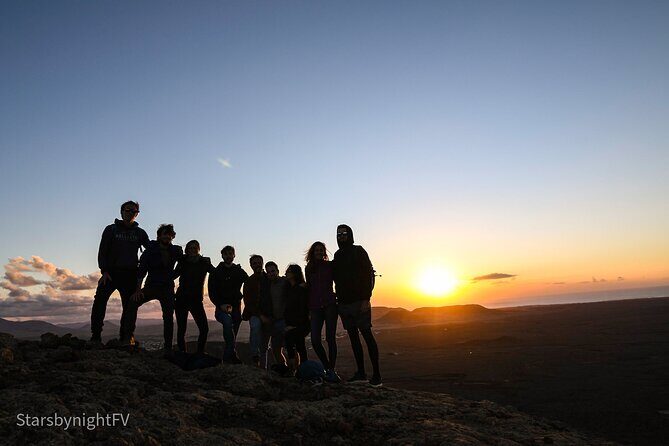
You start the walk before the sun drops. As light fades, the sky turns from bright to dramatic fast. One thing people consistently mention: sunset goes down quickly, so it helps to stay present and not get stuck with your phone camera for too long.
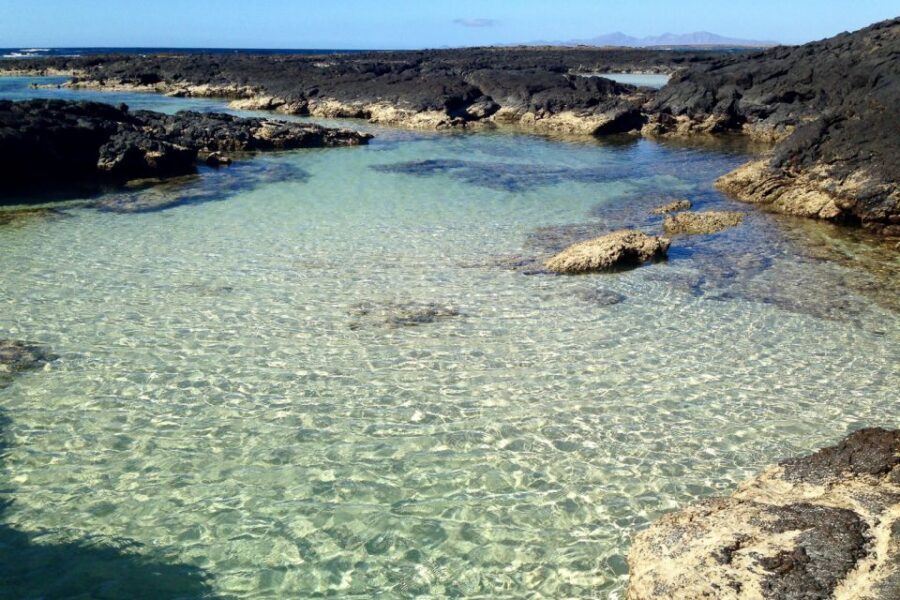
The setting is volcanic. Walking under that kind of terrain changes how sunset colors hit you. The cliffs and ground act like a dark frame, so the sky looks richer.
Other hiking tours in Fuerteventura
2) The blue hour descent and first star spotting
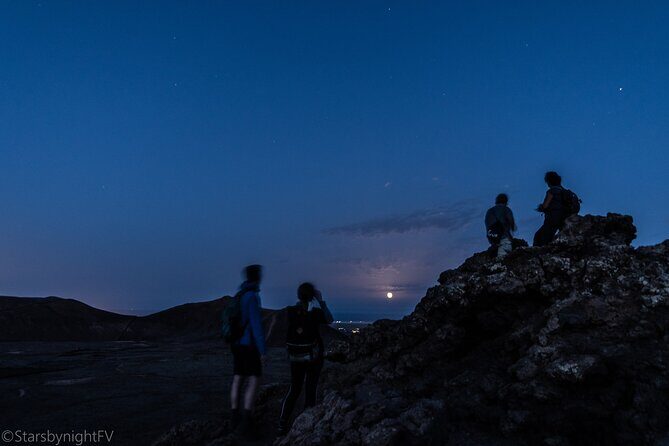
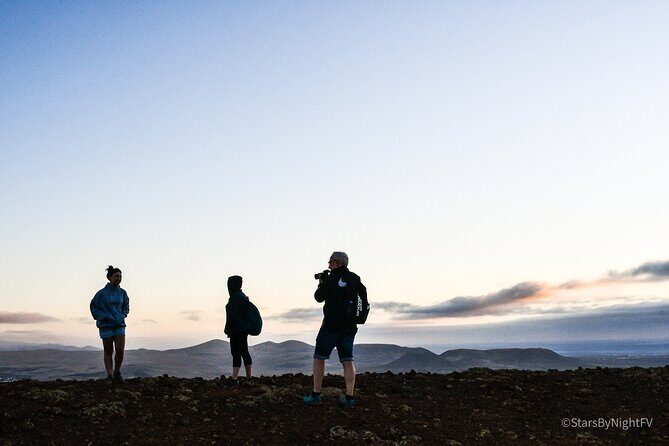
After sunset, you’ll hit the blue hour, that brief stretch where everything looks tinted. The tour includes a descent during this time, and it’s exactly the kind of moment that feels like time-lapse in real life.
This is also when the guide starts pointing out what you can see before it’s fully dark. With a good moon phase, you might still see plenty even when the sky isn’t completely black.
3) Full moon rise, laser pointer guidance, and planet chances
Then comes the big moment: the full moon rise. On a clear night, moonlight can be strong enough to make the volcanic landscape stand out in a way you don’t expect. People describe the moon as super bright and even illuminating the volcano behind them.
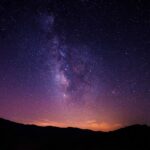
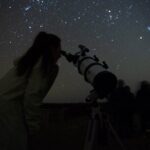
The guide uses binoculars and a laser pointer to help you identify stars and constellations. The key benefit of this setup is that you don’t have to be an astronomy expert. You just follow along and learn the patterns.
And if conditions line up, you might spot bright planets such as Venus, Jupiter, Mars, and Saturn. On one particularly clear evening, people even reported seeing the ISS pass overhead. Not guaranteed, but if your goal is to look up and feel wowed, this tour is built for that.
4) The Barbary Falcon call
After the sun sets, keep your ears open. The tour description highlights the call of the Barbary Falcon, and people have noted this as part of what makes the night feel alive, not just scenic. That’s a nice reminder that this is not only a star show. It’s also wildlife sound in the darkness.
Gear you get (and what to bring anyway)
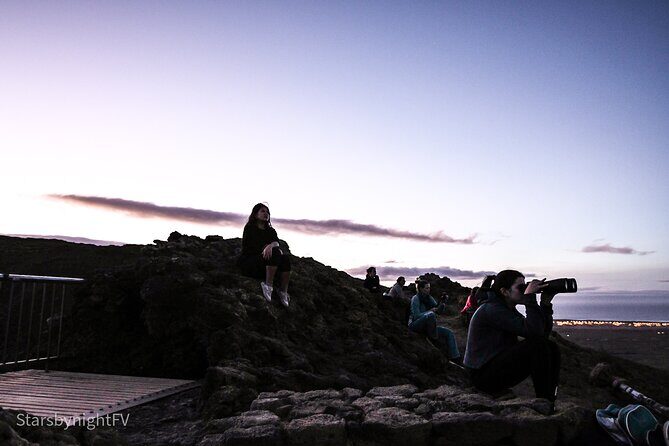
Included: binoculars and head torches. That’s smart. Binoculars remove a huge barrier. Head torches keep the walk back safer without turning the trail into a runway of random phone lights.
What you should bring:
- Comfortable, suitable shoes with grip. Lava can be slippery or just uneven enough to make you trip if you’re in the wrong soles.
- A few layers, since temperatures can drop when the sun goes down.
- If you’re sensitive to wind, pack something for that too. The sky is clear only until the weather changes.
Also: eat dinner before you go. You won’t have time (and you won’t have bathroom options) once the evening is underway.
Where the price feels fair (and what you’re really paying for)
The cost is $51.23 per person for about 3 hours. For that money, you’re not buying a bus ride to a single viewpoint. You’re paying for:
- prime timing around sunset and moonrise
- a small group with a Star Guide
- binoculars and head torches
- guided learning that turns scattered night-sky points into recognizably real constellations and planets
In plain terms: you’re paying for someone to help you see the sky, not just watch it. That’s where the value is.
Weather and communication you should plan for
This experience requires good weather. If conditions aren’t right, you can be offered a different date or a full refund. That’s a normal reality for night sky tours. Clouds don’t care about your holiday plans.
Communication is also part of how this tour runs. You’ll get an exact start time and/or pickup timing by email/message the night before your excursion. The Star Guide will only contact you by phone if there’s a weather issue, so make sure the contact number is correct.
If you’re staying near Corralejo, the tour is easier: pickup is offered within a 5 km radius of Corralejo. If you’re outside that radius, you may need to make your own way to the meeting point at 35640 Villaverde, Las Palmas, Spain.
Who this hike suits best
This is a great match if you like:
- night skies and learning what you’re seeing
- moving from sunset into darkness instead of waiting in one place
- an organized, guided stargazing session with actual tools
It’s also a decent fit for people with moderate physical fitness needs. It’s not described as steep, but you still have to handle uneven lava ground.
It’s less ideal if:
- you need frequent restroom access (there are no bathroom facilities)
- you have limited balance and can’t manage uneven surfaces, even at an easy pace
- you hate the idea of standing and looking up in the cold dark for stretches of time
Should you book this full moon hike?
If you want an evening in Fuerteventura that’s not just “sunset, then dinner,” book it. The strongest reason is the combination: sunset under volcanic terrain, then full moon rise, then guided star and planet spotting with binoculars and a laser pointer.
I’d especially recommend it to first-timers who don’t know the sky, because the Star Guide turns guessing into a real experience. If you’re planning a trip around clear nights, you’ll also feel good knowing the provider can reschedule if the weather won’t cooperate.
FAQ
What’s the duration of the Fuerteventura full moon hike?
It runs about 3 hours (approx.).
What time does the tour start?
The start time is listed as 5:00 pm, but the exact meet time varies with sunset and full moon rising.
Where is the meeting point?
The meeting point is 35640 Villaverde, Las Palmas, Spain. The tour ends back at the meeting point.
Is pickup offered?
Pickup is offered within a 5 km radius of Corralejo. The details for pickup outside that area are not specified.
What’s included in the tour?
Binoculars and head torches are included.
Are there bathroom facilities during the hike?
No. There are no bathroom facilities.
What fitness level do I need?
You should have a moderate physical fitness level.
How many people are in the group?
The group size is capped at a maximum of 13 travelers.
What language is the tour offered in?
The tour is offered in English.
What happens if the weather is bad?
This experience requires good weather. If it’s canceled due to poor weather, you’ll be offered a different date or a full refund.
Are service animals allowed?
Yes, service animals are allowed.