REVIEW · FUERTEVENTURA
Fuerteventura: 3-Days Surf Lesson for Beginners in Corralejo
Book on GetYourGuide →Operated by Point Break WaterSports Fuerteventura · Bookable on GetYourGuide
Surfing lessons live or die by coaching and conditions.
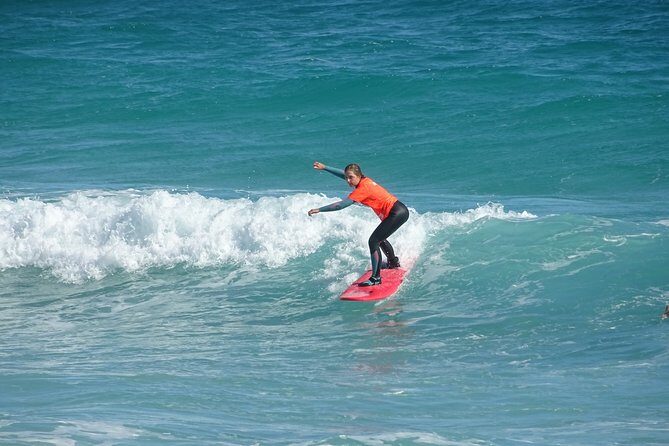
This Corralejo beginner setup wins on two big things: certified instructors (ISA/FCS/FES) and a tight maximum of 8 students per instructor. You get taught in a way that matches what first-timers actually need: foam rides on sand or gentle reef breaks, then small, easy green waves as you gain confidence.
One thing to plan around: you don’t pick a fixed hour. The exact start time is confirmed the night before (between 20:00–21:00) and can shift based on wind, tide, and the day’s best surf spot.
In This Review
- Key Details That Matter for Beginner Surfers
- Corralejo Beginner Surf: What You’re Really Paying For
- Where to Meet: Buendia Hotel Stairs and the Point Break Store
- How the Timing Works (No Fixed Start Hour)
- The 4-Hour Lesson Flow: Theory, Water Practice, and Stretching Out
- 1) Theory first
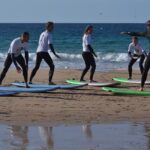
- 2) Warm-up before you hit the water
- 3) Water practice (where the learning really sticks)
- 4) Final stretching
- Waves and Spots: Sandy Beach Breaks and Easy Reef Progression
- Coaching and Safety: What You Can Expect On the Beach
- Equipment, Transfers, and Insurance: Less Logistics, More Waves
- Language and Group Size: Why Max 8 Helps Beginners
- Price and Value: Is $59 Actually Fair?
- Who This Surf Lesson Fits Best (and Who Might Want Another Plan)
- Should You Book This Beginner Surf Lesson in Corralejo?
- FAQ
- How long is the surf lesson?
- Where do I meet the instructor in Corralejo?
- What’s included in the price?
- Do I get a fixed lesson time?
- What should I bring?
- What group size should I expect?
- Is this lesson suitable for kids or wheelchair users?
Key Details That Matter for Beginner Surfers
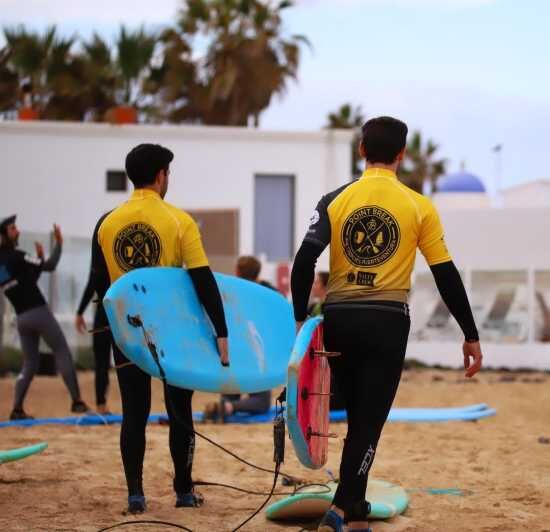
- Certified coaching (ISA/FCS/FES): You’re learning technique and safety from instructors trained for the job.
- Small groups (up to 8 per instructor): More eyes on you, less waiting, better chance to take waves.
- A 4-hour day that includes transfers: Time in and out of the water isn’t an afterthought.
- Beginner-friendly wave choices: Expect sandy beach breaks or easy reef breaks, then progress to green waves.
- All equipment + legal insurance included: Less hassle, more peace of mind on a sport with real risk.
Corralejo Beginner Surf: What You’re Really Paying For
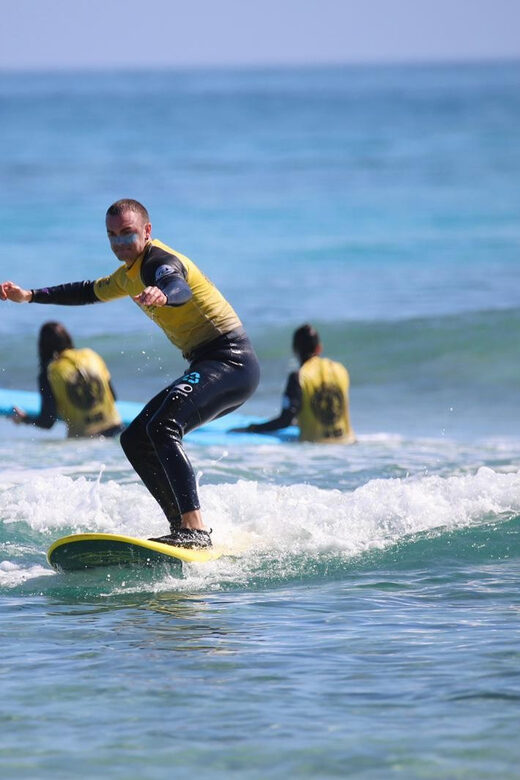
At $59 per person for a 4-hour lesson, this is the kind of surf course value that makes sense when you look at what’s bundled. You’re not just paying for a board and a surf spot. You’re buying qualified instruction, transportation to the best conditions of the day, and coverage under the Canary Islands active tourism rules.
For beginners, that matters. Surfing is one part technique, one part timing, and one part not doing dumb stuff in the water. A structured course that includes theory, coaching, and insurance helps you learn with fewer unknowns. And because the group is capped at 8 students per instructor, you’re less likely to get parked on the beach for long stretches.
Other surf lessons we've reviewed in Fuerteventura
Where to Meet: Buendia Hotel Stairs and the Point Break Store
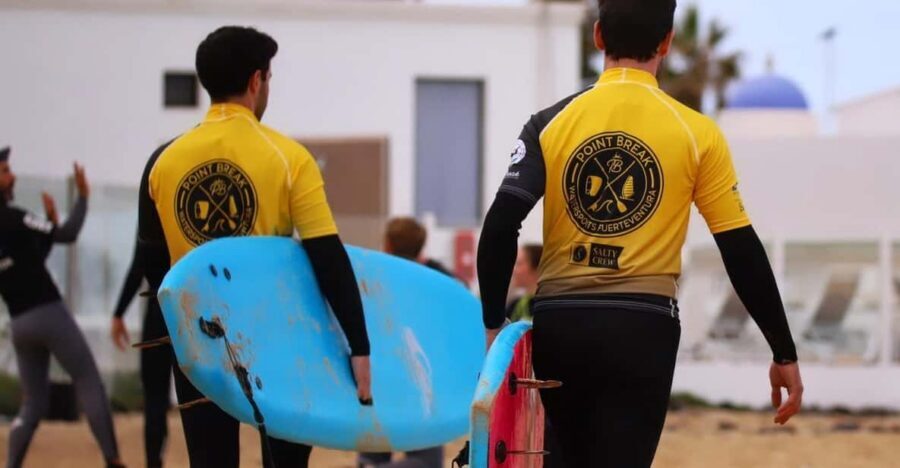
Getting started is easier when you know the exact meeting point.
Go to the Buendia hotel in Corralejo. Enter the hotel, then look for the reception on your right. On your left, there are stairs down. Take the stairs, and you’ll find the Point Break Watersports store below. Your meeting point is right in front of the store.
If your lesson time falls outside the store’s opening hours, you don’t need to hunt for anyone. Sit on the chairs outside, and your instructor will come to you.
How the Timing Works (No Fixed Start Hour)
This course doesn’t run on a one-size-fits-all schedule. After you book, the school confirms the timetable for the next day. In practice, you’ll need to contact the school via WhatsApp to set your lesson time, and the time can change based on weather and surf conditions.
Here’s the key rhythm:
- You get your final confirmed start time the day before your lesson, between 20:00 and 21:00.
- They’re choosing based on factors like wind, tide, spot, and wave type.
Why you should care: surf is picky. A “perfect” forecast on paper can still feel off once wind picks up or water shifts. That night-before timing is how they try to maximize your actual wave time.
The 4-Hour Lesson Flow: Theory, Water Practice, and Stretching Out
Each lesson day is 4 hours total, including the time to travel to the spot and return to the center. The session itself is built in clear stages.
1) Theory first
You start with a theory lesson covering the basics and the right moves. This isn’t just lecturing. It’s meant to help you understand what you’re doing before you’re trying to do it while waves roll in.
Other Corralejo tours and activities in Fuerteventura




2) Warm-up before you hit the water
Next comes a warm-up to get your body ready and help you avoid the usual first-timer stiffness. It also helps you settle in, especially if you feel nervous about the water.
3) Water practice (where the learning really sticks)
Then you head into the practical lesson with guided on-water time. The whole point is to give you repeated chances to try what you learned without skipping straight to waves that are too hard.
4) Final stretching
You finish with stretching so you’re not wrecked after. It’s a small detail, but it helps you enjoy the rest of your day in Fuerteventura instead of limping back to your hotel.
Waves and Spots: Sandy Beach Breaks and Easy Reef Progression
Beginner surf is about the right wave. The course specifically targets conditions that make first success more likely.
You’ll surf on waves that break:
- on sandy beaches, or
- on easy reef breaks
The progression is designed to keep you moving forward without throwing you into a sink-or-swim situation. Expect this sort of pattern:
- ride the foam of already-broken waves (good for learning timing and getting the feel)
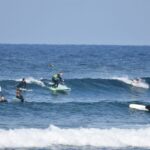
- then catch small, easy green waves that haven’t broken yet (the next step toward real wave riding)
That “foam first, green waves next” approach is smart. Foam rides teach you balance and board control when you’re not fighting a full, steep wave face. Green waves are where you start practicing positioning and timing for the takeoff.
Also, the instructors choose the best spot of the day. That’s not marketing fluff; it’s how you avoid the common beginner problem of getting stuck in rough conditions because the surf was chosen too early or too fixed.
Coaching and Safety: What You Can Expect On the Beach
One reason this course gets strong interest is the claim of certified coaching and legal coverage. You’ll be taught by instructors qualified and certified with ISA, FCS, and FES, and the course includes civil liability insurance plus accident insurance aligned with Canary Islands active tourism rules.
That safety net is a real plus. But coaching quality is what you feel minute-to-minute. From the feedback I see reflected in the experience, there’s a clear split in how the instruction can feel:
- Some learners get an instructor who is calm, patient, and highly supportive, especially when someone hesitates.
- Other experiences describe a lack of guidance and feedback, plus missing safety talk or demonstrations.
Here’s how you protect yourself as a beginner:
- During the first few minutes, ask where the safety priorities are: how to handle board entry, where to position, and what to do if you get caught outside.
- If you’re not seeing demonstrations, speak up. For a beginner, clarity beats toughness.
- Tell your instructor what you’re nervous about. If you feel stuck, a good coach can tailor the next attempt.
If you’re the type who needs frequent reassurance and feedback, this is where that small-group size becomes your best friend. You’ll have more chances to get your questions answered before the next set rolls in.
Equipment, Transfers, and Insurance: Less Logistics, More Waves
This is a “good value” setup partly because it covers the stuff that can wreck your day if it’s missing.
Included:
- All necessary equipment
- Transfer from the meeting point to the best surf spot of the day
- Civil liability insurance
- Accident insurance for sport practice under the Canary Islands active tourism regulation
- Theory and practical instruction
Think about it: if you had to rent gear, find a surf shop, arrange transport, and then worry about what’s covered, you’d burn time and energy before your first wave. Here, those moving parts are handled for you.
Language and Group Size: Why Max 8 Helps Beginners
You’ll get instruction in English, Italian, or Spanish, depending on what the instructor can provide that day. As a beginner, shared language is more than comfort. It’s safety and speed of learning.
And with a maximum of 8 participants per instructor, you generally get:
- more frequent check-ins
- less waiting
- better chances of correction while you’re still on your learning curve
For me, that’s one of the most important reasons to pick this kind of course over a big-group option.
Price and Value: Is $59 Actually Fair?
At $59 for a 4-hour session, the value depends on what you’d otherwise spend and how much coaching you need.
You’re paying for:
- certified instruction (ISA/FCS/FES)
- equipment
- transport to the best spot
- insurance coverage
- a structured plan (theory, warm-up, water time, stretching)
If you’re brand new, you’d usually spend at least some money on rentals and transportation anyway, plus you’d lose the “coaching multiplier” that helps you catch waves sooner.
For the 3-day version (if that’s the option you’re booking), your overall cost will obviously be higher than a single session. But the upside is repeat exposure—each day gives you another chance to practice the basics until they become muscle memory.
If you want to maximize value, pick days when you can stick around in Corralejo without tight schedule constraints, since your start time is confirmed the evening before.
Who This Surf Lesson Fits Best (and Who Might Want Another Plan)
This course is set up for:
- beginners who want a clear starting point
- adults and teens old enough to handle the sport safely (it’s not suitable for children under 15)
It’s also not suitable for wheelchair users, so keep that in mind.
You’ll likely enjoy it most if:
- you want a guided progression (foam rides → easy green waves)
- you value small-group attention
- you want equipment and logistics handled
- you’re okay with the day’s timing shifting based on wind and tide
If you need very frequent, very detailed feedback every single minute, it’s worth arriving ready to ask questions right away. The course is designed for safety and progression, but coaching style can vary in real life.
Should You Book This Beginner Surf Lesson in Corralejo?
I’d book it if you’re:
- new to surfing and want a structured, beginner-first approach
- traveling light and appreciate equipment + transfers + insurance bundled together
- okay with the practical reality that surf spots are chosen based on conditions
I’d be a little cautious if:
- you’re the type who needs constant feedback and demonstrations to feel safe
- you have a tight itinerary and dislike the night-before timing approach
If you go, do yourself a favor: bring what they ask for (change of clothes, towel, sunscreen, water, comfortable clothes, and beachwear), and show up ready to ask questions early. That’s when beginners get the most out of a session.
FAQ
How long is the surf lesson?
The lesson runs 4 hours, and that total includes the time needed to travel to the spot and return to the school.
Where do I meet the instructor in Corralejo?
Meet at the Point Break Watersports store, directly in front of it, after going down the stairs from the Buendia hotel reception area.
What’s included in the price?
You get qualified instructors, all necessary equipment, transfer to the best spot of the day, a theory and practical session, and civil liability insurance plus accident insurance for sport practice.
Do I get a fixed lesson time?
No. Your lesson time can change depending on conditions. You’ll receive confirmation of the time the day before between 20:00 and 21:00.
What should I bring?
Bring a change of clothes, a towel, sunscreen, water, comfortable clothing, and beachwear.
What group size should I expect?
The course is limited to a maximum of 8 participants per instructor, following Canary legislation.
Is this lesson suitable for kids or wheelchair users?
It’s not suitable for children under 15, and it’s not suitable for wheelchair users.