REVIEW · FUERTEVENTURA
Corralejo: Surf Lessons for Beginners with Hotel Pickup
Book on GetYourGuide →Operated by Poseidon Surf Academy · Bookable on GetYourGuide
Your first wave starts with sand basics. In Corralejo, this beginner surf class by Poseidon Surf Academy makes the whole process feel manageable, with hotel pickup and small groups. What I like most is the coaching stays focused, and you still get a simple, step-by-step path into the water. One thing to know upfront: lessons run rain or shine, so plan for wet-weather gear.
A lesson like this is more than just trying to stand up. You’ll warm up, get a bit of theory, then spend about 1.5 to 2 hours actually surfing, with an instructor who stays close by and adjusts to your level. And yes, there’s a playful routine: you’re encouraged to call upon Poseidon before you go catch waves, which fits the whole “learn, smile, repeat” vibe.
You also get the practical extras I appreciate when I’m traveling—wetsuit and board included, plus a snack of water and fruit, and insurance built in. If you’re looking for a first surf experience that’s organized (not chaotic) and good value at $79, this is one to consider.
In This Review
- Key things I’d focus on before you book
- Corralejo surf lessons: why this setup works for true beginners
- Hotel pickup and beach meeting: how the 4 hours usually feel
- Warming up on the sand: where confidence starts
- The short theory session that actually supports the waves
- Into the water: the part you’ll remember
- Gear, snack, and insurance: the included stuff that lowers your risk
- Price and value: is $79 actually fair for a beginner?
- What to bring (and what to do before you go)
- Who this is best for in Corralejo
- Want to go beyond surf after this lesson?
- Should you book this beginner surf lesson?
- FAQ
- How long is the surf lesson?
- Do I get hotel pickup and drop-off?
- What group size is it?
- What surfing gear is included?
- Is there a snack included?
- What languages are the instructors?
- Do I need to register before the lesson?
- Do lessons run in bad weather?
- What should I bring?
- Who is it not suitable for?
Key things I’d focus on before you book
- Pickup makes it low-stress: you get pickup and drop-off in Corralejo and outskirts, or you can meet on the beach.
- Max 6 per instructor: smaller group sizes mean more time with the instructor and fewer long waits.
- Sand-first learning: you practice techniques on sand before you hit the water.
- Theory that supports the session: you get short, useful guidance before you start catching waves.
- About 4 hours total: the whole experience runs around 4 hours, with 1.5 to 2 hours in the water.
- All gear included: wetsuit and surfboard come with the lesson (booties if necessary).
Corralejo surf lessons: why this setup works for true beginners
Corralejo is a smart choice for learning because the area is set up for water sports. What matters for you, though, is not the postcard view—it’s the lesson format. Poseidon Surf Academy runs beginner-focused sessions designed to keep you moving from basics to waves without getting lost in complicated instructions.
The biggest advantage for first-timers is that the class doesn’t skip the foundation. You practice on the sand first, then you move to the water with a plan. That reduces the panic factor and helps you build muscle memory faster.
I also like that it’s a small school with lessons focused on students, not a big crowd pipeline. With a maximum of 6 people per instructor, you’re more likely to get real feedback when something isn’t clicking.
Other surf lessons we've reviewed in Fuerteventura

Hotel pickup and beach meeting: how the 4 hours usually feel
This experience is built around convenience. You get pickup and drop-off service in Corralejo and the outskirts, and you wait about 5 minutes at your pickup point. The provider contacts you ahead of time with the exact pickup time and location, so you’re not guessing where to go.
If you’d rather control your own timing, meeting directly on the beach is available too. That can be a nice option if you’re already near the coastline or you want to extend your day on your own after the lesson.
The lesson runs about 4 hours total. During that time, you’ll spend around 1.5 to 2 hours in the water depending on the students. That split matters: you’re not stuck watching for most of the session, but you also get time for warm-up and instruction on land.
Warming up on the sand: where confidence starts
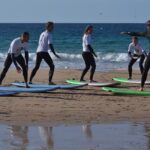
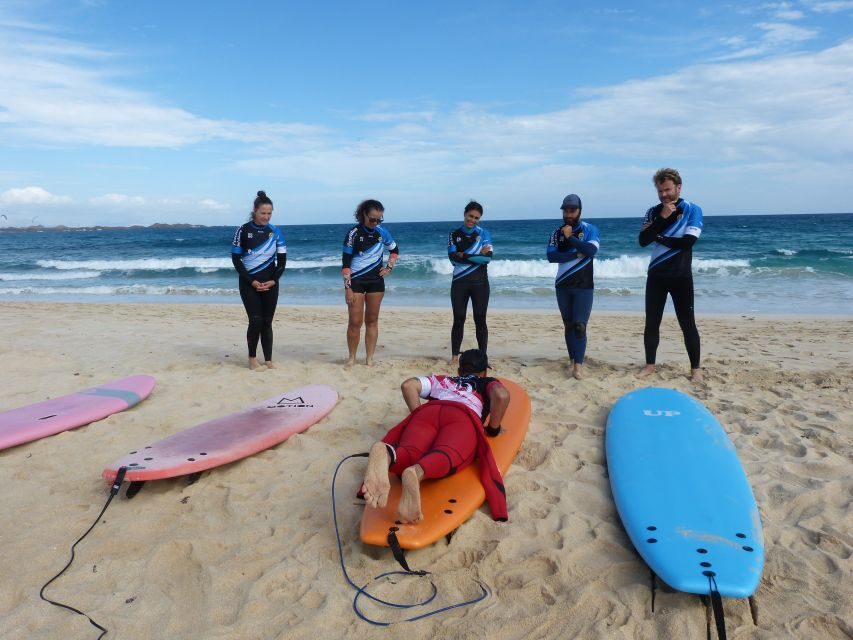
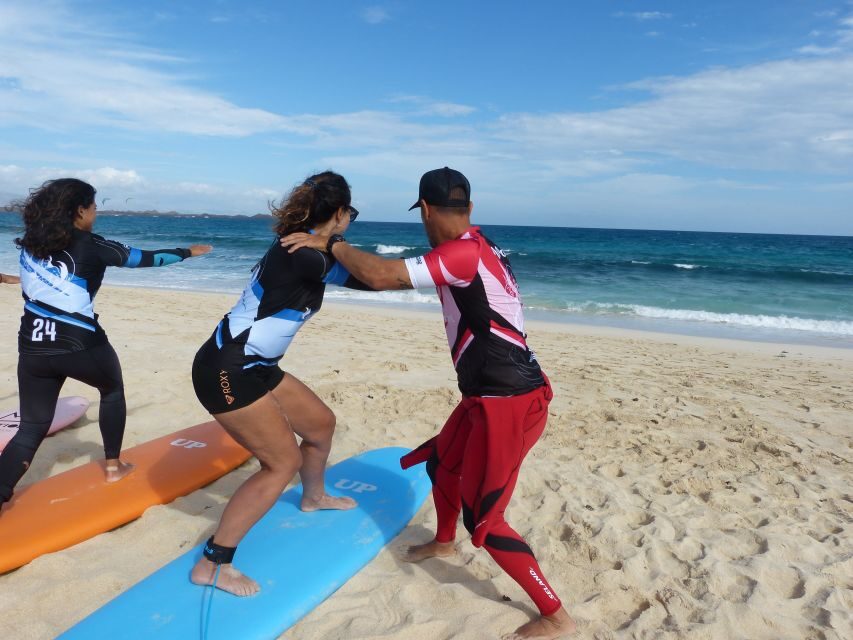
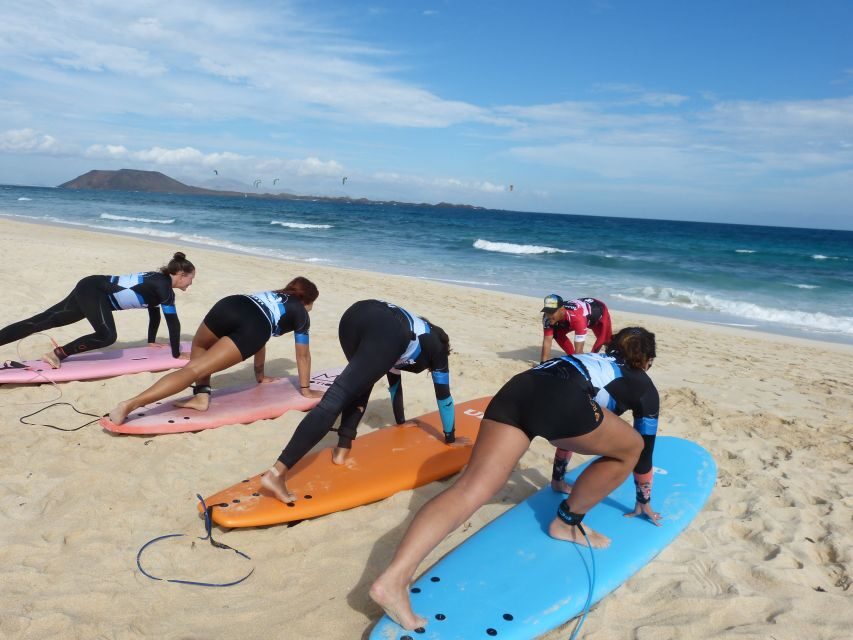
The session starts with a warm-up. Even if you’re not an athlete, this is important because surfing asks your body to do new movements—paddling, balance, and quick reactions. A structured warm-up helps you avoid the stiff-leg feeling that makes balance harder.
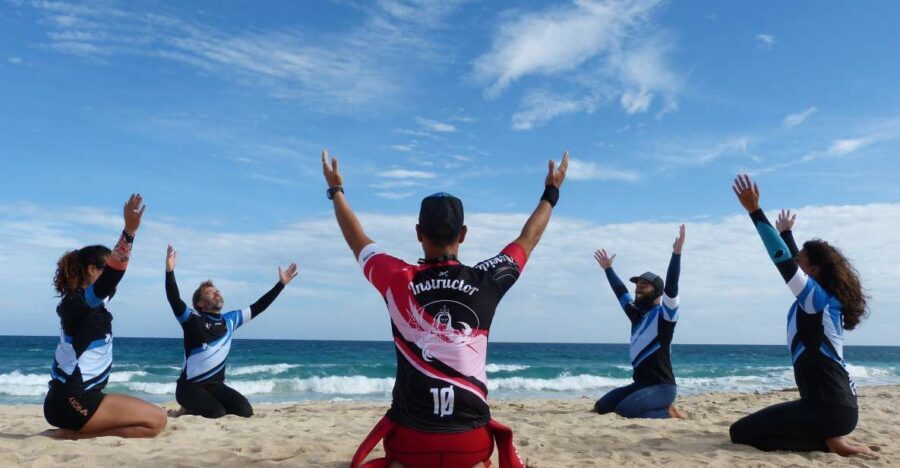
Then comes the sand practice. This part is gold for beginners. You’ll rehearse key surfing techniques on the beach before you face waves and currents at the same time. If you’ve ever tried to learn something new in full chaos, you know how much easier it is when you’ve already tried the basics in a controlled setting.
This is also where you learn the way your instructor talks you through the steps. You’ll hear what to focus on while you’re paddling and when you’re preparing to stand. It’s the kind of practice that helps you remember what to do when you’re tired and cold and the next wave is already arriving.
The short theory session that actually supports the waves
After the warm-up, you get theory. It’s not presented like a lecture; it’s meant to connect to what you’ll do next in the water. For beginners, the main value of theory is understanding how to read what’s happening in front of you and what your body needs to do in response.
You’ll also get context about timing and how to approach catching waves. This matters because surfing isn’t just about power—it’s about positioning and matching your movement to the wave’s pace.
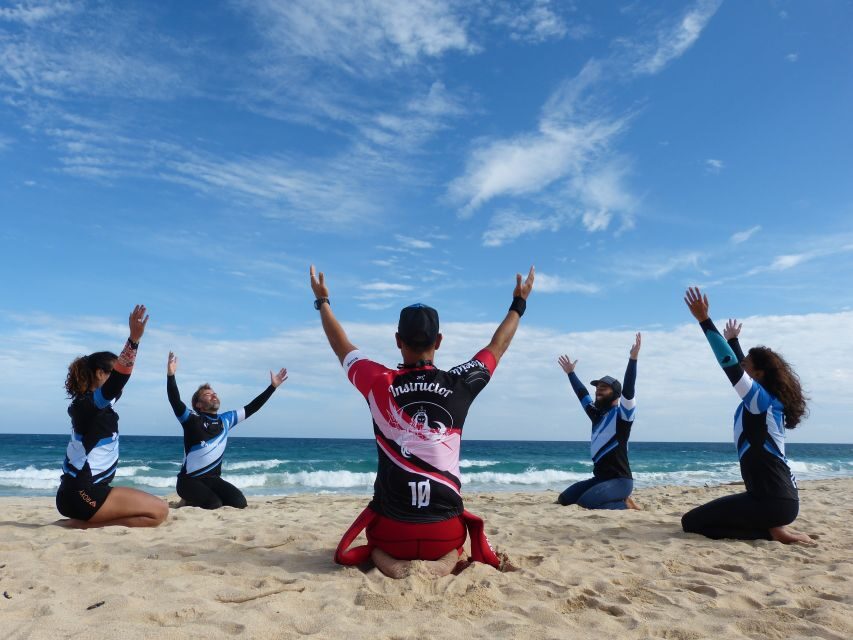
And then there’s the Poseidon moment. The lesson includes a playful reminder to call upon Poseidon before going to catch waves. It sounds simple, but it helps set the tone. It turns nerves into a routine, and that’s a real help when you’re learning something that can feel intimidating.
Into the water: the part you’ll remember
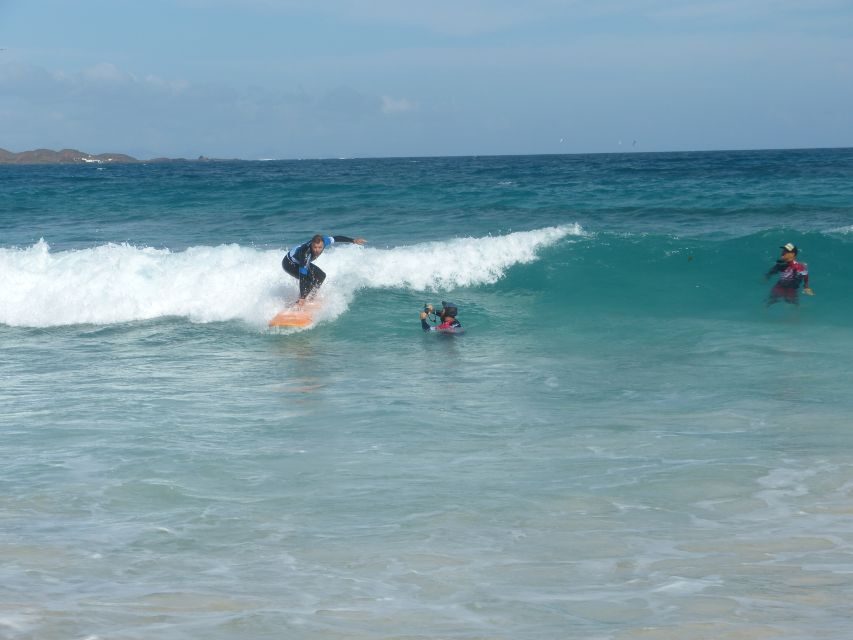
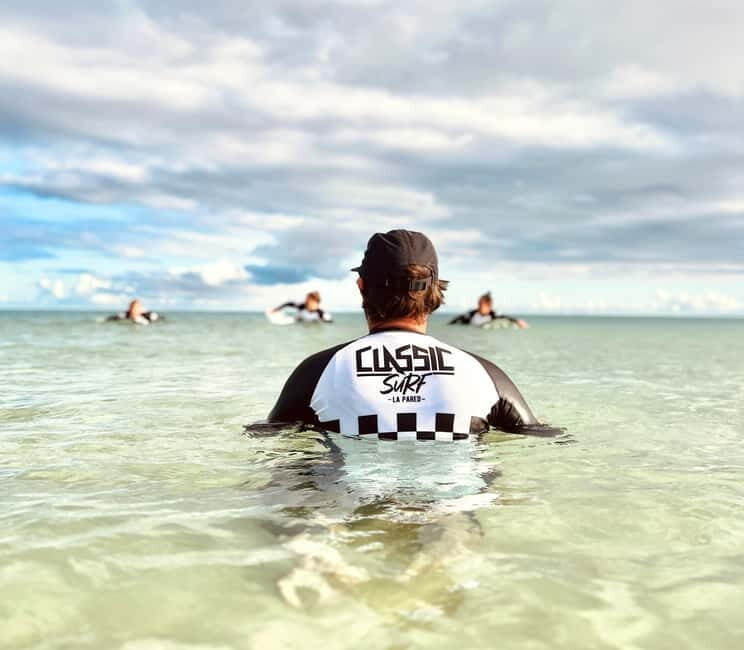
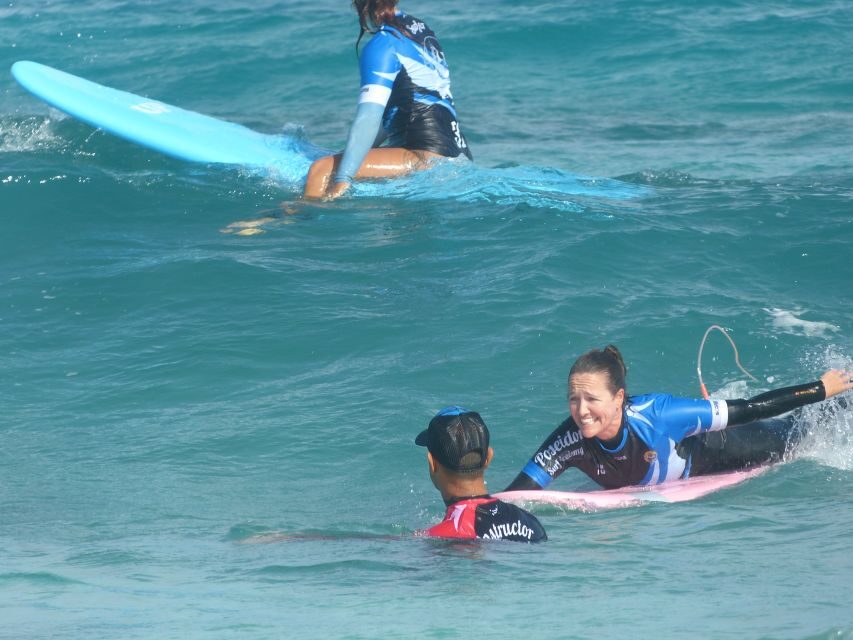
Now you get to surf. You spend about 1.5 to 2 hours in the water, depending on the group and skill levels. That time window is enough to try multiple attempts, not just one quick try and done.
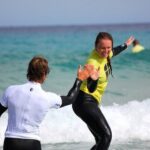
This is where the small-group size pays off again. With a maximum of 6 per instructor, the instructor can watch for the details that make a difference—how you’re paddling, when you’re standing, and whether you’re aligned correctly.
If you’ve surfed before, you’re not locked out. You can get good practice tips to improve your surfing if it’s not your first time. That’s also useful because even “not my first time” surfers often need coaching on specific points like stance, timing, or wave selection.
One more practical detail: the lesson is rain or shine. If the weather turns a bit, you’ll still be in the workflow, which is exactly why you should bring what you need for staying comfortable and safe.
Other Corralejo tours and activities in Fuerteventura




Gear, snack, and insurance: the included stuff that lowers your risk
You don’t have to hunt for equipment. The lesson includes all gear: a wetsuit and a surfboard. Booties are provided if necessary, which is good because it can spare you the discomfort of hot sand or rougher surfaces.
You also get a snack—water and fruit. That’s a small thing that makes a big difference on a 4-hour outing. Surfing burns energy, and you don’t want to be running on empty while you’re trying to learn new movements.
Insurance is included too. That’s the kind of detail you’re happy is there when you’re focused on learning and not on worst-case scenarios.
Two items are not included. A waterproof sun protector in stick form is available to purchase, and there’s also an optional photographer service that isn’t included. If you want photos, you’ll need to arrange that separately.
Price and value: is $79 actually fair for a beginner?
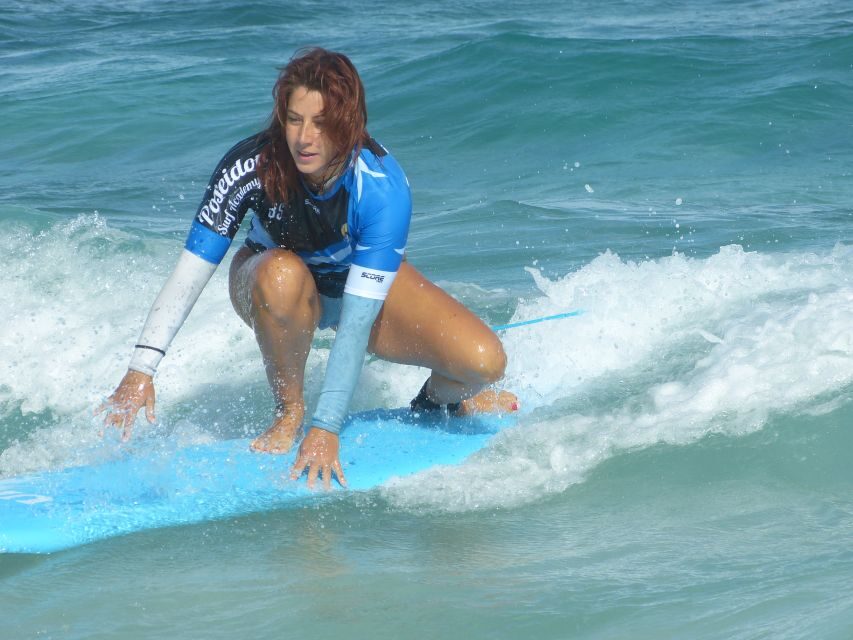
At $79 per person, the price is easier to judge when you look at what you get. This isn’t just a rental and a vague briefing. You’re paying for a beginner coaching session, a small group setup (max 6), insurance, and the equipment plus a snack.
Gear costs alone can add up quickly when you’re traveling. Here, wetsuit and surfboard come with the class. Add in hotel pickup and drop-off in Corralejo and outskirts, and the total package starts to look like real value rather than a basic activity.
Also, the schedule is selected to avoid crowded beaches. That’s not only more pleasant—it’s safer and more fun for students. Crowded water can mean more waiting, more confusion, and fewer chances to try techniques. A quieter setup helps you learn faster.
What to bring (and what to do before you go)
You’ll have a better day if you pack for the water and for the beach time in between.
Bring:
- Swimwear
- Towel
- Sunscreen
The activity takes place rain or shine, so if the forecast looks changeable, plan on getting wet at least at some point. It helps to have a towel ready for after you’re done in the water, not just for comfort but to cool down gradually.
One more prep step you should expect: all students must fill in an online registration to provide height and weight. That data is used to assign the right gear. If you’re picky about fit, this actually helps. Surfboards and wetsuits work better when they’re matched to you rather than thrown at you.
Who this is best for in Corralejo
This is built specifically for beginners and people who want a structured first session. If you’re someone who learns best when someone breaks down steps and corrects you quickly, you’ll probably enjoy this style.
The classes include instructors who speak English, Spanish, Catalan, and French. So even if you don’t speak Spanish, you should be able to follow guidance.
It’s not for everyone. The lesson isn’t suitable for children under 6, pregnant women, people with mobility impairments, or people over 65. If you’re in any of those categories, you’ll want to look for another option that matches your needs and safety requirements.
If you’re traveling solo, with friends, or as a couple, small group lessons can be a fun way to meet people without losing your instructor focus.
Want to go beyond surf after this lesson?
If surfing makes sense to you, you might like the “related activities” angle. The program includes recommendations for other options like Yoga, Surfskate, or DrySurf. These can be handy if you want to keep training even when you’re not getting perfect wave conditions.
You can also ask for recommendations about local places. That’s the kind of practical advice that can help you plan the rest of your day in Corralejo, especially if you’re staying nearby.
Should you book this beginner surf lesson?
Book it if you want a beginner experience that’s structured: sand warm-ups first, short theory next, then real time in the water. The small group size (max 6), gear included, snack included, and insurance included make the $79 price feel more “complete” than many bare-bones surf options.
Pass for now if you’re not comfortable with water in mixed weather, since lessons run rain or shine. Also, check the suitability limits (under 6, pregnant women, mobility impairments, over 65) before you commit.
FAQ
How long is the surf lesson?
The total duration is about 4 hours.
Do I get hotel pickup and drop-off?
Yes. Pickup and drop-off are included in Corralejo and the outskirts. You wait about 5 minutes at your pickup point, and you’ll be contacted with the exact pickup time and location. Meeting directly on the beach is also available.
What group size is it?
It’s a small group, limited to a maximum of 6 participants per instructor.
What surfing gear is included?
All gear is included, including a wetsuit and a surfboard. Booties are provided if necessary.
Is there a snack included?
Yes. Water and fruit are included.
What languages are the instructors?
The instructor speaks English, Spanish, Catalan, and French.
Do I need to register before the lesson?
Yes. All students must fill in an online registration form with height and weight so the gear can be assigned properly.
Do lessons run in bad weather?
Surfing lessons take place rain or shine. If there is severe weather, the activity may be cancelled with no charge to the client.
What should I bring?
Bring swimwear, a towel, and sunscreen.
Who is it not suitable for?
It’s not suitable for children under 6 years, pregnant women, people with mobility impairments, or people over 65 years.